
"coffee science"
4000 article(s) found

Boutique Coffee Science explains the types of coffee in detail
The most widely grown coffee in the world is mainly Arabica beans (Coffee Arabica) and Robota beans (Coffee Robusta). Arabica Arabica is mainly produced in tropical Central and South America, accounting for 3/4 of the world's output. It is planted on alpine slopes at an altitude of 9002000 meters. Growing in areas ranging from 15 to 20C, Arabica needs high artificial density care, rich taste and disease tolerance.
Boutique Coffee Science lists a few rare common sense of coffee
1: there are only two calories in an espresso, which is great news for MM. 2:coffee speaks similarly in almost all languages in the world, and there is no doubt that even sounds like kafe are the same. Coffee is the second largest drink in the world after water, and tea is the third. 4: when you drink coffee, your brain vibrates in response.

Natural hair growth accelerator? The latest caffeine test report has been released.
Professional barista exchanges please follow the coffee workshop (Wechat official account cafe_style) hair growth technology amazing discovery Oright caffeine hair solution 7.2cm natural beauty intense hair growth technology has a breakthrough amazing discovery, Hongguang University of Cosmetic Science and Technology Institute of Cosmetic Science and Technology and Oright O'Ryder industry-university cooperation to publish an experimental report on O'Ryder caffeine hair care solution

Coffee Molecular Science-what is the difference between light roasted coffee and heavy roasted coffee?
Coffee Molecular Science-the difference between light-roasted coffee and heavy-roasted coffee in general, coffee on the market boasts that coffee is fragrant and mellow, and some good coffee emphasizes that acid is great. What is the difference between roasting and roasting? what is the difference between the explosion of coffee beans and the end of the explosion? it is called shallow roasting at this time, the variety of coffee beans, growth altitude, growth soil, mountain surface.
Boutique Coffee Science talk about the other uses of coffee
Coffee is drunk by many people or made into cakes; Golden Dad White Coffee tells you that it has other uses. Furniture scratches such as scratches on wooden furniture, wipe with a cloth soaked in coffee, the scratches will soon be invisible. Remove the smell of the refrigerator in addition to tea, lemon and orange peel, freshly ground coffee powder also has the same effect. After a day or two, there was no smell in the fridge.
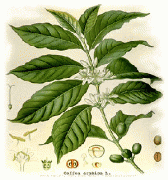
Fine Coffee Science explains the types of coffee beans in detail.
There are mainly two kinds of coffee on the market, such as Coffea Arabica and Coffea Robusta. Each of them can be subdivided into more variety branches. Most of the coffee beans in circulation on the market are distinguished by their origin. The following is a list of some of the major producing countries and their famous coffee: Brazilian coffee fruit (Arabica) Brazil: Santos, Brazil
Cafe owner vs. Science and technology upstart
One weekend afternoon, I saw a cafe by the side of the road. The window furnishings caught my eye. A handsome young boy immediately came out to greet me and introduced how mellow and delicious their coffee was. I don't usually have the habit of drinking coffee, and I don't have any special research on coffee, so I asked him to make me a cup of mellow coffee. Soon after, the coffee was brought. He asked me

Basic Coffee Science Post: what is White Coffee
White coffee originated in Malaysia at the beginning of the last century. At that time, the British had already mastered the method of roasting and making coffee, and it had become a fashionable drink for the mainstream people in Britain. They taught the local people the method of making coffee in the West. People have been drinking Western-style coffee ever since. With the passage of time, the influence of coffee in Malaysia has gradually expanded, and drinking coffee has become a tradition of many local families.
Milk Science: what kind of Milk is used for Coffee florets
Professional coffee knowledge exchange more coffee bean information Please follow the coffee workshop (Wechat official account cafe_style) Milk Source: from science, the milk produced by each farm has different fat, protein content and different grades of sweetness. The actual quality of milk depends on the food that cows eat every day, as well as their daily growing environment, and how the milk is collected, stored and processed.

Coffee residue tray Hong Kong students "skillfully" change kitchen waste into cutlery
According to Hong Kong media reports, students of the Hong Kong Institute of Science and Technology of higher Education have used their ingenuity to turn banana leaves into spoons and coffee grounds into bread trays. By upgrading and recycling kitchen waste, not only food waste can be reduced, but also waste can be reduced from the source. Solve the problem of disposable tableware. It is reported that the environmentally friendly spoon made from banana leaves comes from the School of Environment and Design of the Hong Kong Institute of Science and Technology of higher Education.

Popular science | changes in coffee bean roasting
Professional baristas please pay attention to the coffee workshop (Wechat official account cafe_style) coffee fruit after harvesting and processing into coffee raw beans, and coffee raw beans must be roasted to become a common coffee bean on the market, roasted at high temperature will give off aroma, color darker, and coffee raw beans roasted will produce the following phenomena: (1) weight loss: coffee raw beans at more than 200 ℃

Basic knowledge of fine coffee what is the science of drinking coffee
A cup of strong coffee is hard to refuse. When you are racking your brains to think about a problem, a cup of strong coffee may open you up, so many people like to drink coffee and can't even work without it. But drinking coffee also has a lot of attention, drinking improperly, it will cause damage to your body. Coffee contains caffeine and 300.
Boutique Coffee Science detailed explanation of Coffee Belt (COFFEE WORLD MAP)
Coffee trees grow in tropical or subtropical agricultural gardens centered around the equator and called coffee belts. Most of the coffee production is between the Tropic of Cancer, 25 degrees north of the tropical or subtropical equator and 30 degrees south of the equator. An area with an annual average temperature of 16-25 degrees Celsius, no Frosts Descent and rainfall of 1600-2000 mm. At present, coffee is mainly produced by seven countries.
Boutique Coffee Science explores whether coffee is actually bitter
When it comes to black coffee, almost everyone's first reaction is bitter, which has almost become synonymous with coffee. So no matter whether black coffee is really bitter or not, few people are willing to take the initiative to touch him. People have become accustomed to adding milk and sugar to seek the feeling that it is not bitter and smooth, so the quality of coffee is often ignored, anyway, it is bitter. Is good coffee really bitter? Answer

Tokyo Science and Technology Coffee Shop! Mobile phone bean selection / baking degree robotic arm master makes coffee for you
Professional coffee knowledge exchange more coffee bean information please follow the coffee workshop (Wechat official account cafe_style) Cafe X in the United States, weird Caf in Japan, and so on, such robot coffee shops have emerged one after another, and Tokyo science and technology coffee shop ROBOTS.COFFEE is about to open. The store provides customers with coffee beans made by mobile phones, the degree of roasting, and then the coffee is made by the robot arm for coffee love.
Boutique coffee science explains in detail how to clean coffee cups
Due to the quality of the coffee cup, the cup surface is tight, the pores are small, and it is not easy to attach coffee scale, so after drinking the coffee, as long as you rinse the cup with clean water immediately, you can keep the cup clean. After long-term use of the coffee cup or not immediately washed after use, so that coffee scale attached to the surface of the cup, at this time, the cup can be soaked in lemon juice to remove coffee scale. If you can't make the coffee at this time,

The first AI coffee shop in China landed in Shenzhen artificial intelligence can understand Cantonese.
Exchange of professional baristas Please follow the Coffee Workshop (Wechat official account cafe_style) during this Shenzhen Science and Film week, hard Egg formally introduced the concept of AI Cafe to the outside world. In the science and technology exhibition section, Hardy joined hands with Rethink Robotics to show the conceptual model of AI Cafe, a coffee shop completely controlled by AI, which can be used to realize all robot servers by voice.
Boutique Coffee Science explains the roasting degree of coffee in detail
Cinnamon Roast: cinnamon baking: this is the lightest kind of baking. There is no oil on the surface of the coffee beans. Large coffee bean manufacturers often mix the lightly roasted coffee beans with the coffee beans they sell. Because it can save money and increase the quantity. Cinnamon-roasted coffee beans usually do not appear in urban baking City Roast: the name of urban baking.

Science on the Tip of the tongue-- Coffee Culture
Civet coffee is made from beans that cannot be digested and excreted by civets after swallowing. After its popularity, civets face the tragic fate of being forcibly fed to increase their excretion. According to the report, a recent report published in Animal Protection magazine assessed the living conditions of 48 civets on 16 plantations and found that the Kopi Luwak industry is basically a

Principle of Italian coffee bean extraction guidelines for the use of Italian coffee beans Italian coffee bean baking science
Professional coffee knowledge exchange more coffee bean information please follow the coffee workshop (Wechat official account cafe_style) what is the concept of Italian coffee bean blending? From trying all kinds of machines, to understanding the principle and science of extraction; from baking commercial beans to the charm of shallow roasting; to come into contact with boutique coffee, to see the mystery of the local soil. It is another world to mix beans with different characteristics.